


The Silesian University of Technology marked International Earth Day with an event titled “Planet of the Future – Technology in the Service of Nature.” It brought together people interested in how science, technology and education can respond to today’s environmental challenges, showing that engineering solutions play a key role in building a more sustainable future.
As part of the programme, Professor Marcin Sajdak presented the latest results from the CUPOLA project (Carbon-neutral pathways of recycling marine plastic waste), funded under the Marie Skłodowska-Curie Actions in the Horizon Europe programme. He spoke about the global scale of the plastic waste problem – how much waste we generate, how it accumulates in seas and oceans, and how it is still most often managed through landfilling, incineration with energy recovery or mechanical recycling.
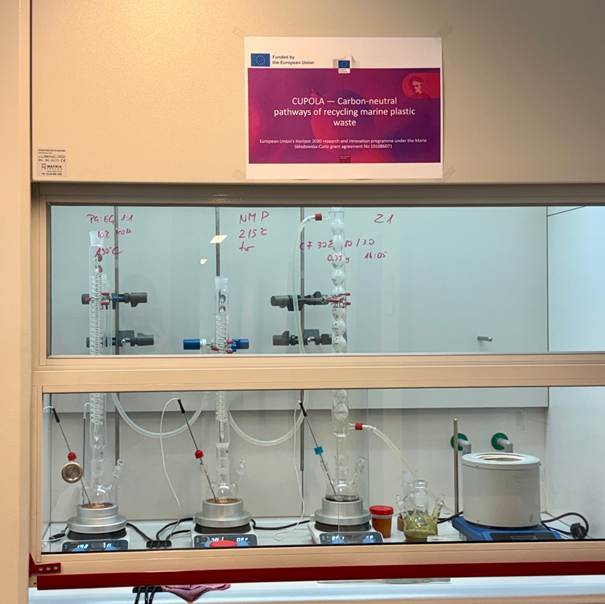
A major focus of the talk was the chemical recycling of PET waste, including bottles and polyester fibres. This approach allows plastics to be broken down into high-purity chemical feedstocks instead of ending up in landfills or the environment. During his presentation, Professor Marcin Sajdak addressed the global scale of the plastic waste problem—from the volume of waste generated, through its presence in seas and oceans, to the currently dominant management methods, such as landfilling, incineration with energy recovery, and mechanical recycling.
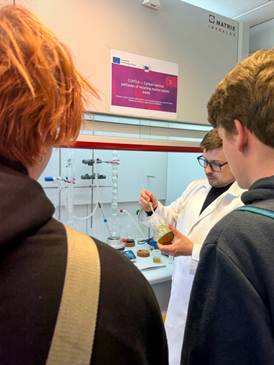
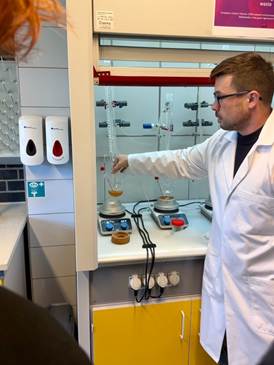
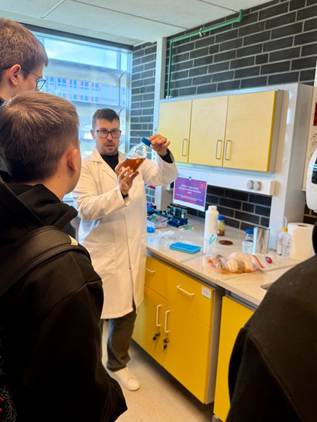
The event was not limited to slides and theory. Participants also took part in a live laboratory demonstration of the chemical recycling process, following each step from PET sample preparation, through the course of the reactions (including aminolysis and glycolysis), to the formation of products with real application potential. This hands-on element allowed attendees to see up close how research ideas translate into practical technological solutions.
During the lecture, attention was also drawn to the carbon footprint of different PET recycling routes. Analysing it makes it possible to compare recovery pathways in terms of their environmental performance, and the results show that well-designed chemical recycling processes can support the transition towards a circular economy by reducing greenhouse gas emissions and the use of virgin fossil resources.
The meeting clearly showed that research carried out at the Silesian University of Technology – including within the CUPOLA project – is closely aligned with global efforts to protect the environment and develop a low‑carbon economy. It is a tangible example of how science and technology can help protect our planet in practice, while also inspiring students and young researchers to get involved in sustainable development.


Leave a Reply